Licence, rating, and who issues them
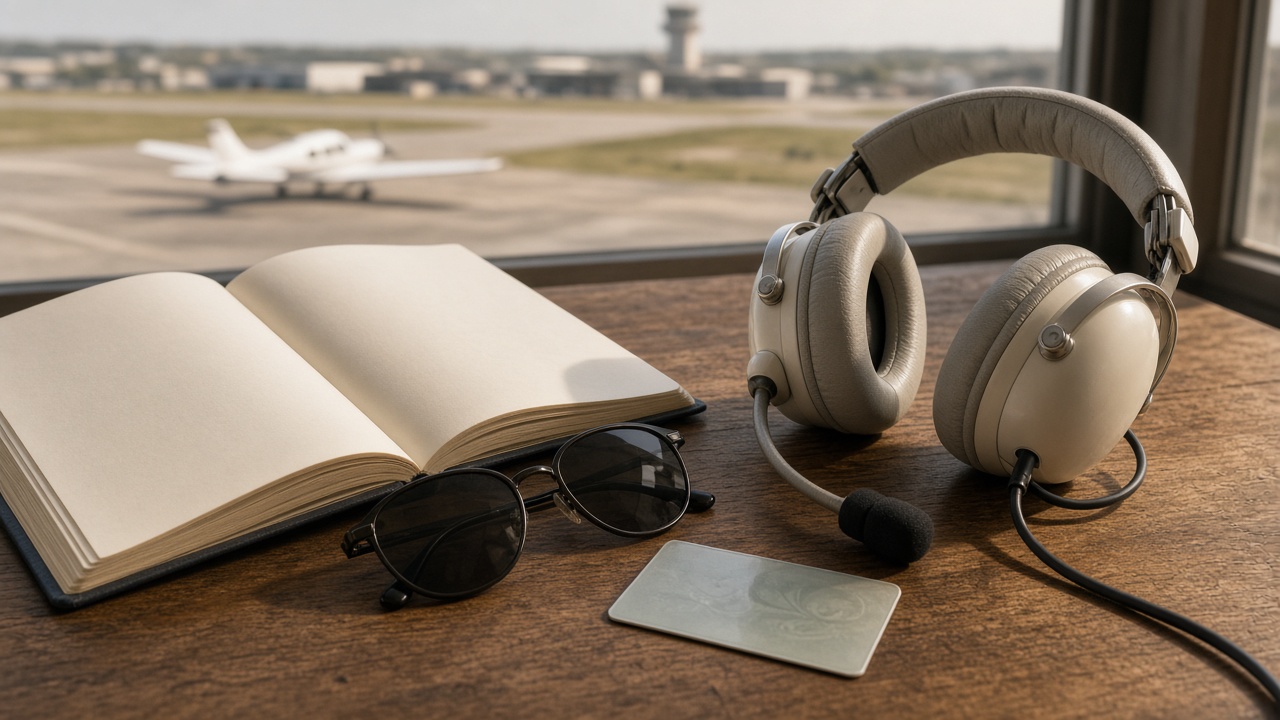
EASA Part-FCL is the common licensing rulebook. The plastic card is issued by a national authority of an EASA member state, not by EASA as a local flying club. Privileges depend on the licence and on the ratings printed with it, such as single-engine piston, multi-engine piston, night, or an instrument rating.
The paragraphs below are about aeroplanes, marked (A). Helicopter, balloon, and sailplane licences are separate tracks.
LAPL(A) — Light Aircraft Pilot Licence
The LAPL is an EASA private licence for non-commercial flying in simpler, lighter aeroplanes. Privileges are narrower than a PPL. Under FCL.105.A you may fly single-engine piston aeroplanes or touring motor gliders with a maximum take-off mass of 2,000 kg or less, with no more than three passengers (four people on board). A new holder must first fly 10 hours as pilot in command before carrying passengers. The medical is the lighter LAPL medical.
It is a useful licence if you want to fly locally in a light aircraft and you are content to stay inside the privileges. It is a poor fit if you want the licence that other countries are used to seeing. The LAPL is not an ICAO licence, so acceptance outside the EASA system is limited compared with a PPL. The UK CAA no longer issues new LAPL(A)s; since 1 October 2025 UK students get an NPPL instead.
PPL(A) — Private Pilot Licence
The PPL(A) is the standard private aeroplane licence. It is not a licence to be paid as a pilot. You may fly the aircraft you are rated for, carry passengers within the privileges, and add ratings later (a more complex class or type, night, or an instrument rating).
Compared with the LAPL, it is the broader private qualification and the one usually discussed when people talk about an ICAO-style private licence. “ICAO-style” does not mean every country will accept it without paperwork. If you plan to fly outside the issuing state, ask that state what it requires.
CPL(A) — Commercial Pilot Licence
The CPL(A) is the first licence that allows you to be paid to act as a pilot, within its privileges. On its own it does not make you an airline captain. Airline flying in multi-crew aircraft usually also needs an instrument rating, ATPL theoretical knowledge, and a multi-crew course, and the operator will have its own requirements.
You can reach a CPL through a modular route, adding it after private training and hour building, or as part of an integrated course at an ATO. The modular route lets you stop and start. The integrated route is one approved syllabus, full time, at a school approved for that course.
ATPL(A) — Airline Transport Pilot Licence
The ATPL(A) is the airline transport licence. It is what people mean by an “unfrozen” ATPL. You cannot hold it on exam results alone. The authority issues it when you have the required licence, ratings, theoretical knowledge and flight experience, and you are at least 21.
A frozen ATPL is the informal name for holding a CPL(A), an instrument rating, and a pass in the ATPL theoretical knowledge exams, before you have the experience for the ATPL itself. Employers understand the phrase. It will not appear as “frozen ATPL” on the licence.
A short FAA comparison
The United States does not issue an LAPL. The nearest conversation is the FAA private, commercial, and airline transport certificates, plus more limited certificates such as sport pilot and recreational pilot, which are not the same thing as an LAPL. The FAA changed the sport pilot rules in 2025 (the MOSAIC rule), so older comparisons may be out of date.
- FAA private pilot certificate: the usual comparison with a PPL. 14 CFR 61.109 sets a 40-hour minimum for aeroplanes, including 20 hours of instruction and 10 hours solo. An approved Part 141 course can use 35 hours. Real training often takes longer.
- FAA commercial pilot certificate: the usual comparison with a CPL. 14 CFR 61.129 sets 250 hours of flight time for aeroplanes, with lower totals only for some approved courses.
- FAA airline transport pilot certificate: the usual comparison with an ATPL. The baseline is 1,500 hours. A restricted ATP is available at 750 hours for qualifying former military pilots, 1,000 hours for graduates of an approved aviation bachelor’s degree and 1,250 hours for an approved associate degree (14 CFR 61.160).
Sources
Checked on 17 October 2026. Rules are amended, so read the current text before you rely on a figure.
- EASA, Easy Access Rules for Aircrew (Regulation (EU) No 1178/2011), Part-FCL: https://www.easa.europa.eu/en/document-library/easy-access-rules/online-publications/easy-access-rules-aircrew-regulation-eu-no
- UK CAA, Private pilot licence for aeroplanes: https://www.caa.co.uk/general-aviation/pilot-licences/aeroplanes/private-pilot-licence-for-aeroplanes/
- UK CAA, LAPL light aircraft pilot licence: https://www.caa.co.uk/general-aviation/pilot-licences/aeroplanes/light-aircraft-pilot-licence-for-aeroplanes
- UK CAA, Airline transport pilot licence for aeroplanes: https://www.caa.co.uk/Commercial-industry/Pilot-licences/Aeroplanes/Airline-transport-pilot-licence-for-aeroplanes
- 14 CFR 61.109, private pilot aeronautical experience: https://www.ecfr.gov/current/title-14/chapter-I/subchapter-D/part-61/subpart-E/section-61.109
- 14 CFR Part 141, Appendix B, private pilot certification course: https://www.ecfr.gov/current/title-14/chapter-I/subchapter-H/part-141/appendix-Appendix%20B%20to%20Part%20141
- 14 CFR 61.129, commercial pilot aeronautical experience: https://www.ecfr.gov/current/title-14/chapter-I/subchapter-D/part-61/subpart-F/section-61.129
- 14 CFR 61.160, restricted-privileges ATP (aeroplane): https://www.ecfr.gov/current/title-14/chapter-I/subchapter-D/part-61/subpart-G/section-61.160
- FAA, MOSAIC fact sheet: https://www.faa.gov/newsroom/fact_sheets/MOSAIC_Fact_Sheet.pdf