What you are booking
You fly with a flying instructor who is the pilot in command. You are not sent solo, you do not need a licence, and you do not sit an exam. Schools sell the flight under several names. The useful question is what is included: the aircraft, the instructor, the briefing, and the fees the aerodrome charges for that one flight.
It is reasonable to book one before you choose a long course. It is a poor moment to hand over money for a whole PPL. The cost guide is about how to read a quote. This page is about the flight itself. This site does not publish a price for it.
Before you fly
Expect a short briefing, not a ground-school lecture. The instructor should explain how you will get into and out of the aircraft, what you may touch, and what they will do if they need to take the controls. You will usually walk around the aircraft while they show you the checks they are required to make.
Wear clothes you can move in, and shoes that will not slip on a pedal. Leave scarves and loose hats behind. Tell the school about your weight when they ask: a light training aircraft has a limit, and an honest number is what makes the flight possible. If you are unwell, say so. A first flight is a bad place to discover that you are coming down with something.
The school can refuse or shorten the flight for weather, for the aircraft, or for air traffic. A windy day at a small aerodrome is a normal reason to rebook. That is the school doing the job, not a sales tactic.
The flight itself
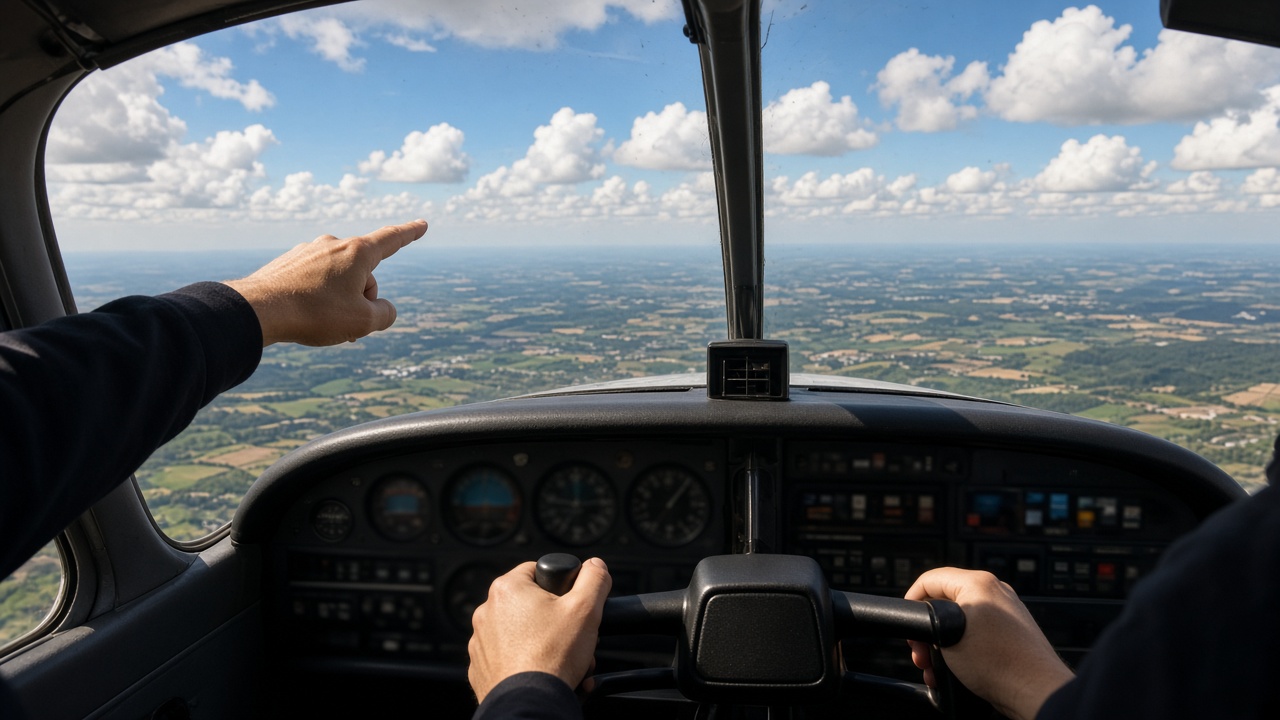
The instructor taxies, talks to the radio, and handles the take-off and landing unless they have briefed you otherwise. In the cruise they often let you follow through on the controls or fly straight and level and a gentle turn. You will feel the aircraft move more than an airliner, and a turn feels like a tilt rather than like a car. That is ordinary.
Noise is higher than people expect, which is why you wear a headset. The intercom is how you hear the instructor. If you feel unwell, say so immediately. Instructors would rather level the aircraft and return than press on. You can also ask them to take the controls back at any time. That is the whole point of them being the pilot in command.
Afterwards there should be a few minutes of debrief: what you did, and what a first course of lessons would look like if you want one. A debrief is not a contract. Take the paperwork home and read it against the questions in the choosing-a-school guide.
What it is not
It is not solo, and it is not the start of your logbook unless the school records it as instruction towards an approved course. Many trial flights are sold as an experience. Those hours do not move you towards a licence. Some schools, if they are approved for the licence and they choose to log the flight as dual instruction, can credit it. You have to ask which of the two you bought.
It does not replace a medical. It does not test you. It does not mean the school has accepted you for a course, and it does not mean you have accepted them. One circuit in good weather will not show you how the school handles a month of wind.
Questions worth asking when you book
- How long is the airborne time, as opposed to the time you are at the aerodrome?
- What is included, and what is extra, such as landing fees or a headset hire?
- Who is the instructor, and are they a flying instructor rather than a passenger on a sightseeing flight?
- What happens if the weather cancels it, and is the money refunded or only rebooked?
- If you continue into a course, will this flight be logged as dual instruction?
- Which authority approves the school for the licence you might want next?
Sources
Checked on 17 October 2026. Rules are amended, so read the current text before you rely on a figure.
- EASA, Easy Access Rules for Aircrew (Regulation (EU) No 1178/2011), Part-FCL: https://www.easa.europa.eu/en/document-library/easy-access-rules/online-publications/easy-access-rules-aircrew-regulation-eu-no